
Completing an MBA is a significant achievement that opens doors to leadership positions, higher salaries, and career advancement. However, many graduates face a common question: after MBA which course is best?
The answer depends on your career goals, specialization, industry preferences, and future aspirations. While an MBA provides strong business and management knowledge, additional certifications and specialized courses can significantly improve employability and earning potential.
Many students also wonder about career options after MBA, whether pursuing another course is necessary, and after MBA can I get job opportunities immediately. The good news is that MBA graduates have access to a wide range of career paths across marketing, finance, business analytics, operations, consulting, technology, and entrepreneurship.
In this guide, you’ll learn about the best courses after MBA, top job opportunities, salary expectations, career paths, and how to choose the right direction for long-term success.
Table of Contents
Why Pursue a Course After MBA?
Although an MBA equips you with management skills, specialized courses can help you:
- Gain industry-specific expertise
- Increase salary potential
- Improve employability
- Stand out from competitors
- Develop technical skills
- Access leadership opportunities
Many recruiters today prefer candidates who combine managerial knowledge with specialized domain expertise.
After MBA Which Course Is Best?
The best course depends on your interests and career objectives.
Let’s explore the top options.
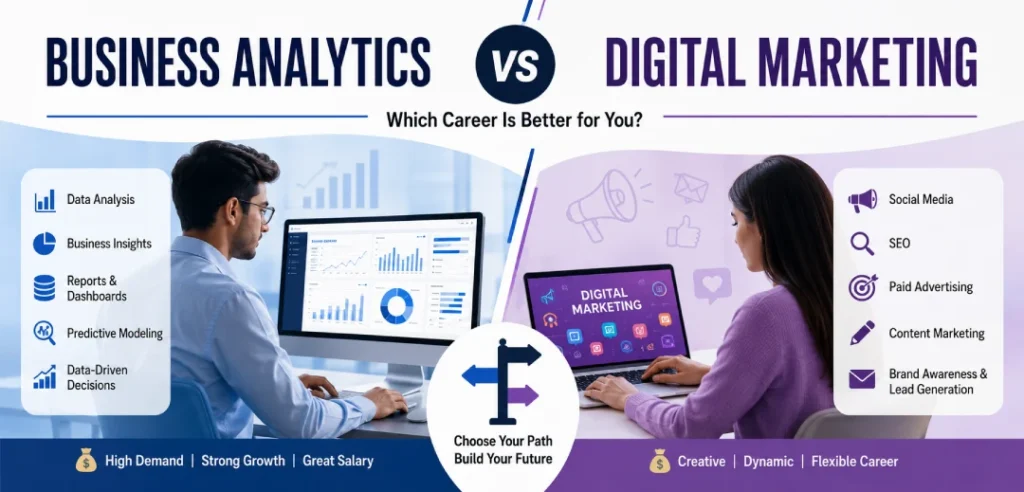
Business Analytics Certification
Why Choose Business Analytics?
Organizations increasingly rely on data-driven decisions.
Business Analytics helps professionals analyze data and convert insights into business strategies.
Skills Learned
- Data Analysis
- Power BI
- Tableau
- SQL
- Business Intelligence
- Predictive Analytics
Suitable For
- Marketing Professionals
- Finance Professionals
- Operations Managers
- Consultants
Career Opportunities
- Business Analyst
- Data Analyst
- Analytics Consultant
- Strategy Manager
Average Salary
₹8–20 LPA
Digital Marketing Certification
Why Choose Digital Marketing?
Digital transformation has created massive demand for marketing professionals with online expertise.
Skills Learned
- SEO
- Google Ads
- Social Media Marketing
- Email Marketing
- Performance Marketing
- Content Marketing
Career Opportunities
- Digital Marketing Manager
- SEO Specialist
- Growth Marketer
- Brand Manager
Average Salary
₹6–18 LPA
Data Science Course
Data Science remains one of the highest-paying fields globally.
Skills Learned
- Python
- Machine Learning
- Statistics
- Artificial Intelligence
- Data Visualization
Career Opportunities
- Data Scientist
- Machine Learning Engineer
- AI Consultant
Average Salary
₹10–30 LPA
Project Management Certification (PMP)
Project Management certifications are highly valued across industries.
Benefits
- Leadership Development
- Project Execution Skills
- Global Recognition
Career Opportunities
- Project Manager
- Program Manager
- Delivery Manager
Average Salary
₹12–35 LPA
Financial Modeling and Investment Banking
Ideal for MBA Finance graduates.
Skills Learned
- Financial Modeling
- Valuation
- Mergers and Acquisitions
- Equity Research
Career Opportunities
- Investment Banker
- Financial Analyst
- Corporate Finance Manager
Average Salary
₹8–25 LPA
Chartered Financial Analyst (CFA)
One of the most respected certifications in finance.
Career Opportunities
- Portfolio Manager
- Investment Analyst
- Wealth Manager
Average Salary
₹10–40 LPA
Supply Chain and Operations Management Certification
Suitable for operations professionals.
Skills Learned
- Logistics
- Procurement
- Inventory Management
- Process Optimization
Career Opportunities
- Operations Manager
- Supply Chain Analyst
- Procurement Manager
Average Salary
₹8–20 LPA
Human Resource Analytics Certification
HR is becoming increasingly data-driven.
Skills Learned
- Workforce Analytics
- Talent Management
- HR Technology
Career Opportunities
- HR Manager
- Talent Acquisition Manager
- HR Analytics Specialist
Average Salary
₹7–18 LPA
Cloud Computing and Technology Management
Technology-focused MBA graduates often choose cloud-related certifications.
Popular Certifications
- AWS Certified Solutions Architect
- Microsoft Azure
- Google Cloud Professional
Career Opportunities
- Cloud Consultant
- Technology Manager
- Digital Transformation Manager
Average Salary
₹10–30 LPA
Product Management Course
Product Management has become one of the most attractive careers for MBA graduates.
Skills Learned
- Product Strategy
- Market Research
- Product Lifecycle Management
- Agile Methodologies
Career Opportunities
- Product Manager
- Associate Product Manager
- Product Marketing Manager
Average Salary
₹12–35 LPA
Career Options After MBA
MBA graduates can pursue various career paths depending on their specialization and interests.
Marketing Manager
Responsibilities
- Brand Strategy
- Campaign Management
- Customer Acquisition
Salary
₹8–25 LPA
Business Analyst
Responsibilities
- Data Analysis
- Strategic Planning
- Process Improvement
Salary
₹8–20 LPA
Financial Manager
Responsibilities
- Budgeting
- Forecasting
- Financial Planning
Salary
₹10–30 LPA
HR Manager
Responsibilities
- Talent Management
- Recruitment
- Employee Engagement
Salary
₹8–22 LPA
Operations Manager
Responsibilities
- Process Optimization
- Resource Management
- Supply Chain Oversight
Salary
₹8–25 LPA
Management Consultant
Responsibilities
- Business Strategy
- Problem Solving
- Organizational Transformation
Salary
₹12–40 LPA
Product Manager
Responsibilities
- Product Development
- Customer Research
- Market Strategy
Salary
₹12–35 LPA
Entrepreneur
MBA graduates often launch startups due to their strong business knowledge.
Benefits
- Independence
- Scalability
- Wealth Creation
After MBA Can I Get Job Immediately?
Yes.
One of the biggest myths is that MBA graduates must pursue additional courses before securing employment.
The reality is that many MBA graduates receive placement offers directly from their institutions or secure jobs shortly after graduation.
Factors influencing employability include:
- College reputation
- MBA specialization
- Internship experience
- Communication skills
- Industry knowledge
- Networking abilities
Additional certifications can improve opportunities but are not always mandatory.
After the MBA Course, Job Opportunities
The demand for MBA graduates remains strong across industries.
Top Hiring Industries
Banking and Financial Services
- Financial Analyst
- Relationship Manager
- Investment Consultant
Information Technology
- Business Analyst
- Product Manager
- Project Manager
Consulting
- Strategy Consultant
- Management Consultant
Healthcare
- Operations Manager
- Business Development Manager
E-Commerce
- Growth Manager
- Category Manager
Manufacturing
- Supply Chain Manager
- Operations Manager
FMCG
- Brand Manager
- Sales Manager
Best Courses After MBA Based on Specialization
MBA Marketing
Recommended Courses:
- Digital Marketing
- Brand Management
- Marketing Analytics
- Growth Marketing
MBA Finance
Recommended Courses:
- CFA
- Financial Modeling
- Investment Banking
- Risk Management
MBA HR
Recommended Courses:
- HR Analytics
- Talent Management
- Organizational Development
MBA Operations
Recommended Courses:
- Supply Chain Management
- Six Sigma
- PMP Certification
MBA IT
Recommended Courses:
- Business Analytics
- Cloud Computing
- Product Management
Salary Comparison of Top Courses After MBA
| Course | Average Salary Range |
|---|---|
| Product Management | ₹12–35 LPA |
| Data Science | ₹10–30 LPA |
| Business Analytics | ₹8–20 LPA |
| CFA | ₹10–40 LPA |
| Financial Modeling | ₹8–25 LPA |
| Digital Marketing | ₹6–18 LPA |
| PMP | ₹12–35 LPA |
| Cloud Computing | ₹10–30 LPA |
How to Choose the Right Course After MBA
Step 1: Identify Career Goals
Ask yourself:
- Do I want a technical role?
- Do I want leadership positions?
- Do I want entrepreneurship opportunities?
Step 2: Evaluate Market Demand
Choose industries with strong future growth.
Step 3: Consider Salary Expectations
Compare earning potential across fields.
Step 4: Assess Personal Interests
Long-term career satisfaction depends on alignment with your interests.
Step 5: Analyze Industry Trends
Focus on high-growth areas:
- AI
- Data Analytics
- Cloud Computing
- Product Management
- Digital Marketing
Common Mistakes MBA Graduates Make
- Following Trends Blindly: Not every popular course suits your career goals.
- Ignoring Skill Development: Practical skills matter more than certificates alone.
- Overlooking Networking: Professional relationships often create career opportunities.
- Delaying Career Decisions: The earlier you gain experience, the faster your career grows.
Future Scope After MBA
MBA graduates continue to remain highly valuable across industries.
Emerging opportunities include:
- AI Strategy
- Digital Transformation
- Business Analytics
- Product Management
- FinTech
- Consulting
- Sustainability Management
As businesses evolve, professionals who combine management knowledge with specialized expertise will enjoy the highest demand.
Frequently Asked Questions (FAQs)
After MBA which course is best for high salary?
Courses in Product Management, Data Science, CFA, Business Analytics, and Project Management often lead to higher salaries.
After MBA can I get job without additional courses?
Yes. Many MBA graduates secure jobs immediately after graduation without pursuing additional certifications.
What are the best career options after MBA?
Popular options include Marketing Manager, Business Analyst, Financial Manager, Product Manager, Consultant, and Operations Manager.
Is Business Analytics a good course after MBA?
Yes. Business Analytics is among the most in-demand fields and offers strong salary growth.
Which course after MBA has the best future scope?
Business Analytics, Data Science, Product Management, AI-related programs, and Cloud Computing currently offer excellent future prospects.
Can MBA graduates become Product Managers?
Absolutely. Product Management is one of the most popular career paths for MBA graduates.
Is CFA worth pursuing after MBA Finance?
Yes. CFA significantly enhances credibility and career opportunities in finance.
Which course is best after MBA Marketing?
Digital Marketing, Marketing Analytics, Brand Management, and Growth Marketing are excellent choices.
Conclusion
If you’re wondering after MBA which course is best, there is no one-size-fits-all answer. The ideal course depends on your specialization, interests, and long-term career goals.
For professionals seeking higher salaries and strong future demand, Business Analytics, Product Management, Data Science, CFA, and Project Management certifications are among the top choices. At the same time, Digital Marketing, HR Analytics, and Cloud Computing offer excellent opportunities for specialization and growth.
The good news is that there are numerous career options after MBA, and the answer to after MBA can I get job is a definite yes. Many graduates secure rewarding positions immediately after completing their MBA, while additional certifications can further accelerate career growth.
The key takeaway is simple: choose a course that aligns with your strengths, industry demand, and future aspirations. By combining your MBA knowledge with specialized skills, you can unlock better jobs, higher salaries, and long-term professional success.